

What Features Does a Grab-Like Ride-Hailing App Need?
A ride-hailing platform is more than a booking screen. The passenger app, driver app, admin dashboard, GPS location, dispatch, payment and settlement flow must work together. A business should define the whole operating system before asking for a quotation.
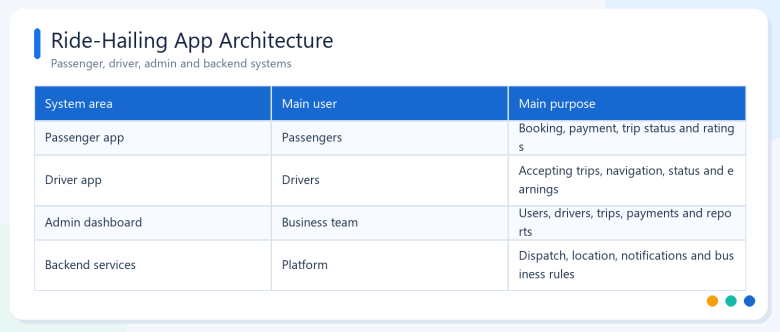
What is the basic architecture?
A Grab-like platform normally includes a passenger app, driver app, admin dashboard and backend services.
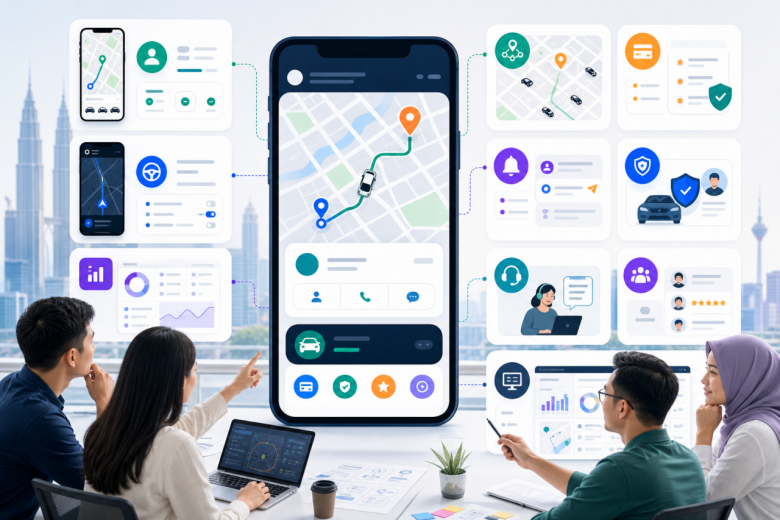
What should the passenger app include?
· Registration, login, OTP verification and profile management.
· Pickup and destination search, map pinning, saved places and multiple stops.
· Vehicle types, estimated fare, distance, trip time and booking status.
· Driver profile, vehicle details, plate number, rating and location.
· Card, e-wallet, transfer, cash, corporate billing and refund handling.
· Ratings, complaints, customer support and trip history.
What should the driver app include?
· Driver registration, identity, licence, vehicle and bank details.
· Document review, account status and reactivation workflow.
· New-trip alerts, accept, reject and cancellation actions.
· Arrived, started, in-trip and completed status updates.
· Earnings, commission, incentives, withdrawals and settlement records.
· Support, incident reporting, vehicle issues and trip disputes.
What should the admin dashboard manage?
· Users and drivers: profiles, reviews, accounts, complaints and verification.
· Trips and dispatch: active trips, cancelled trips, driver locations and exceptions.
· Service areas and pricing: vehicle types, distance fees, promotions and special zones.
· Payments and reports: gross bookings, platform commission, driver earnings, refunds and settlements.
The dispatch engine can match drivers by distance, vehicle type, driver status or service area. Pricing rules should be configurable by authorised staff where possible.
MVP, standard and platform versions
An MVP (Minimum Viable Product) can validate the core booking flow before the business invests in a full platform.
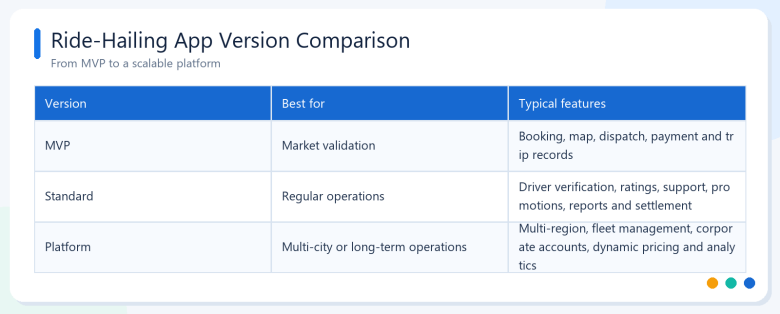
If an enterprise is only testing operations in a single city, it can implement the core ride hailing workflow first. However, if multi city support, multiple fleets and corporate clients are required from launch, the system architecture must be designed in advance.
What should a business prepare before development?
1. Define the target city and service area.
2. Decide whether the service targets individuals, companies or fleets.
3. List the must-have features for the first release.
4. Confirm iOS, Android, web or cross-platform requirements.
5. Prepare map, payment, SMS and notification requirements.
6. Define driver verification, cancellation and refund rules.
7. Define platform commission and driver settlement logic.
8. Ask for separate delivery scopes for passenger, driver and admin systems.
9. Confirm who controls the server, data, accounts and source code.

FAQ
What features does a Grab-like app need?
At minimum, it needs passenger, driver and admin systems with booking, maps, dispatch, payment, trip management, verification, support and settlement.
Does a ride-hailing platform need two apps?
Not always. A business can start with a passenger app and a simplified driver web or mobile workflow.
What is the hardest part to develop?
Real-time location, dispatch, trip-state synchronisation, payment, cancellation rules and driver settlement usually require the most planning.
Who should start with an MVP?
A business that wants to validate a city, customer demand and driver supply before expanding.
Can a company copy Grab directly?
It should not copy the brand, interface or code. Use common ride-hailing concepts and design around your own operations.